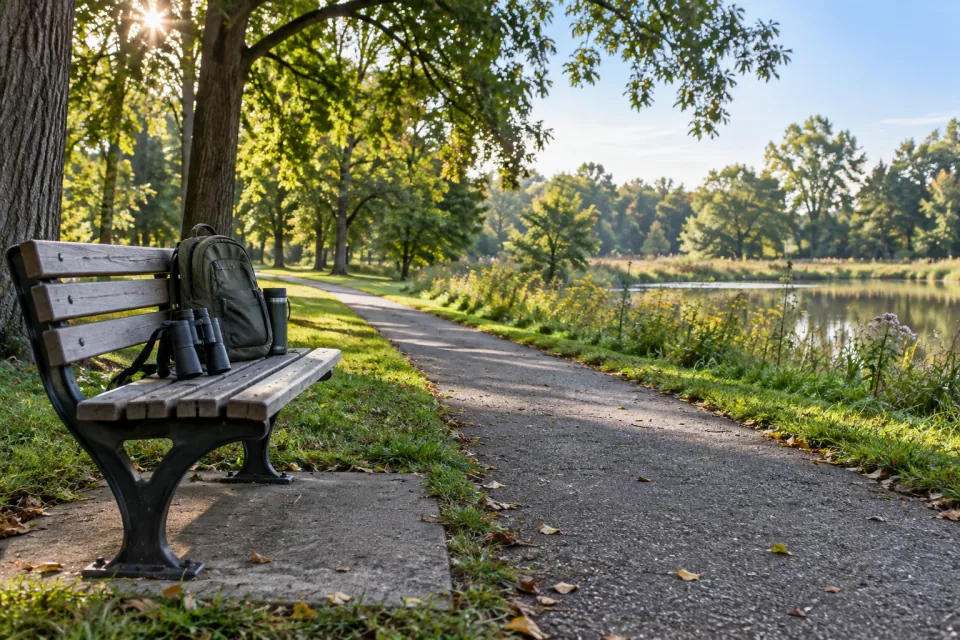
01
Buying Notes
What makes a useful first pair?
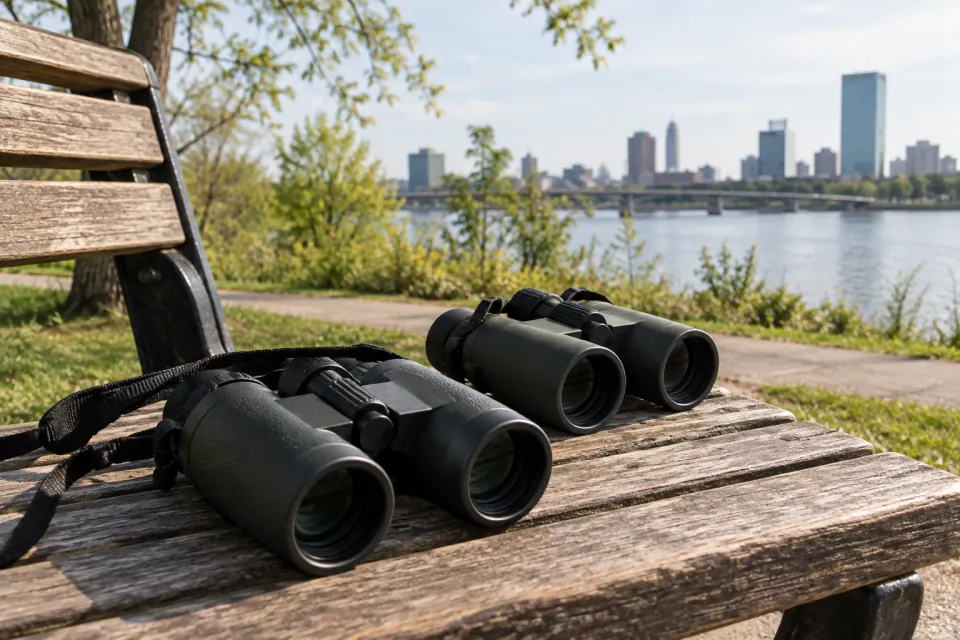
Compare fit, weight and ease of focusing before chasing the highest number on a label.
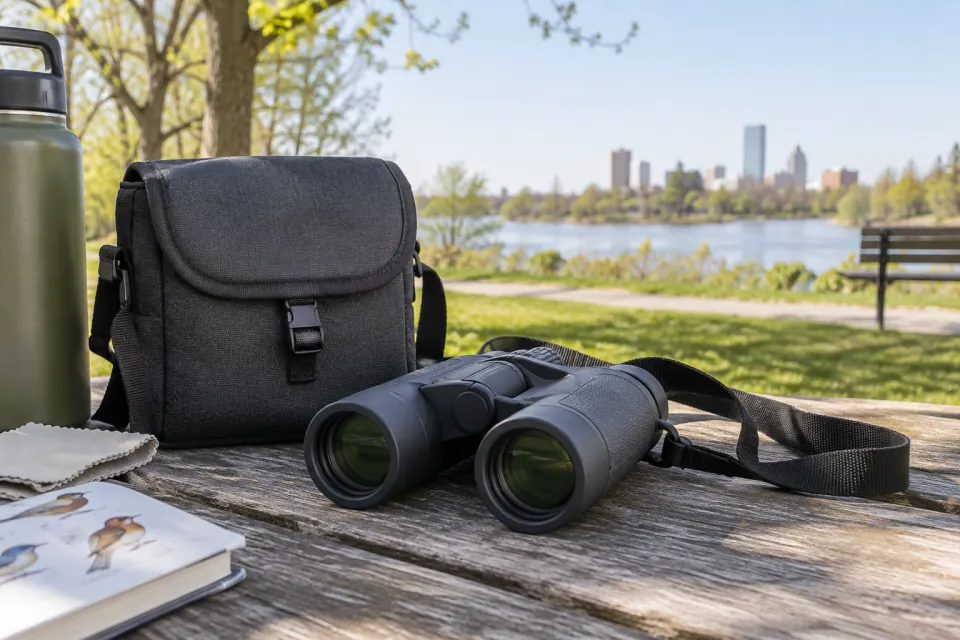

Short routes, plain-language optics and a field kit that earns its place.
10 notes
Compare fit, weight and ease of focusing before chasing the highest number on a label.
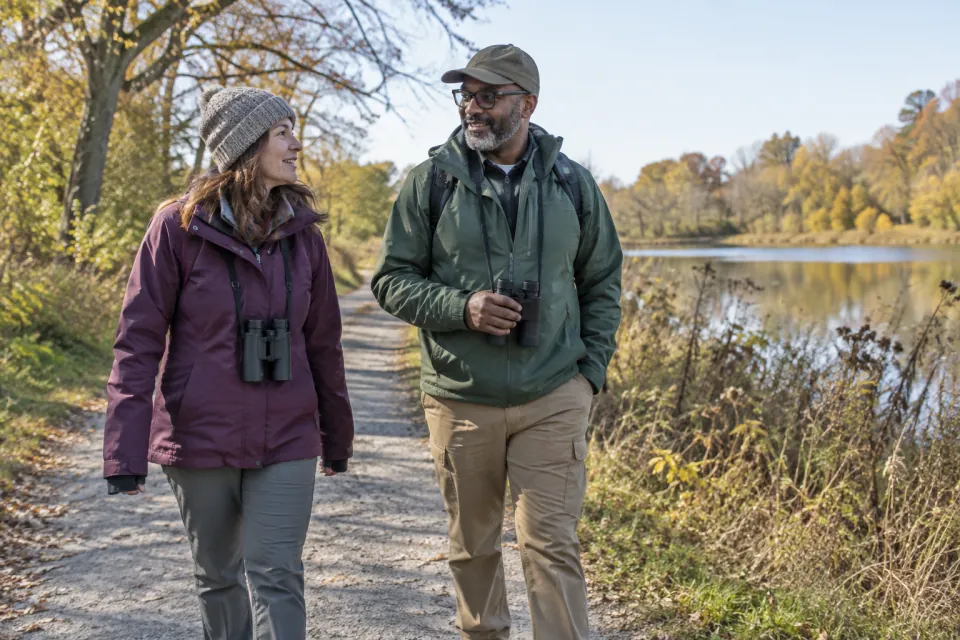
Choose a pace and pause points that work for both people.
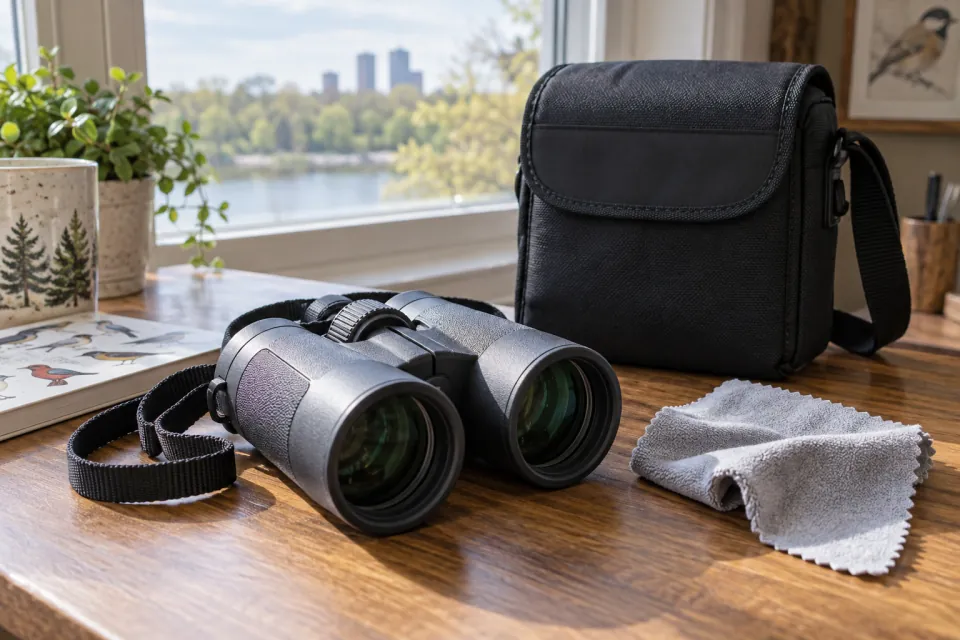
Follow the maker's cleaning instructions and keep abrasive dust away from lenses.
Record a few observable details such as shape, movement or habitat before trying to identify a bird.
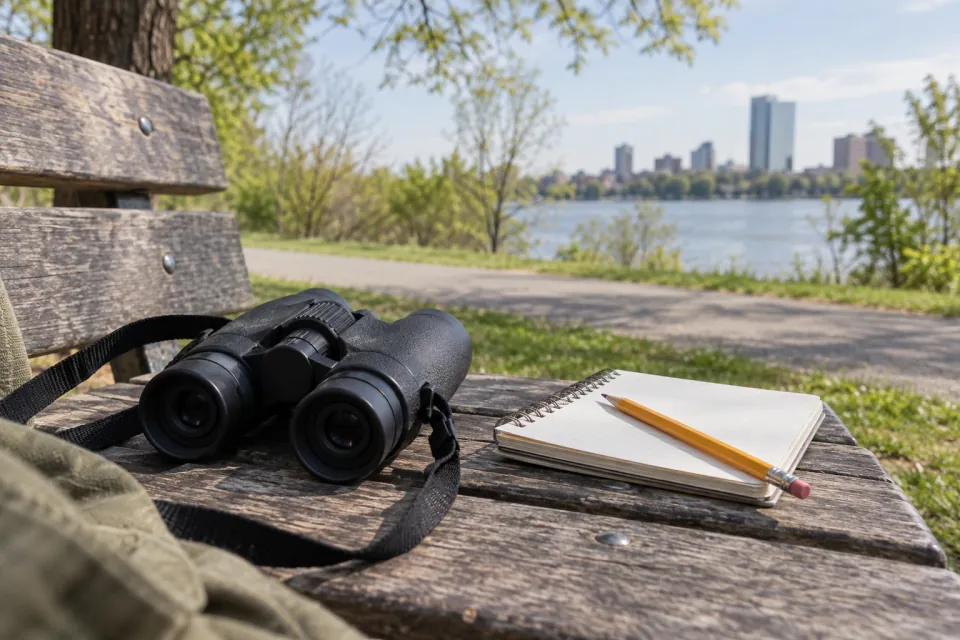
Check the forecast and choose a route with easy exit points.
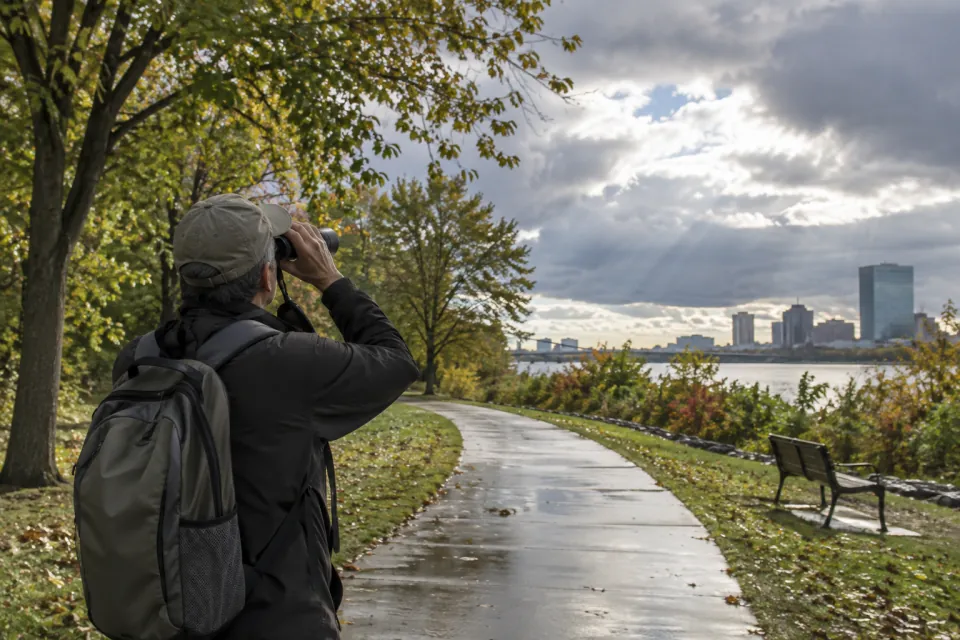
Take what supports the actual loop, not what belongs on an expedition packing list.
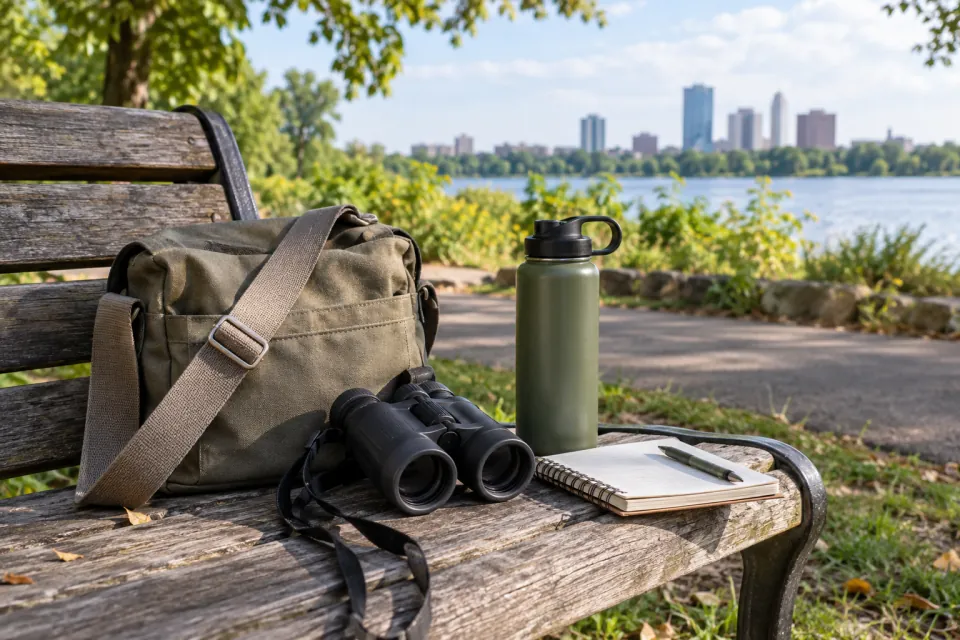
Set eye spacing and focus according to the instrument's instructions before following movement.
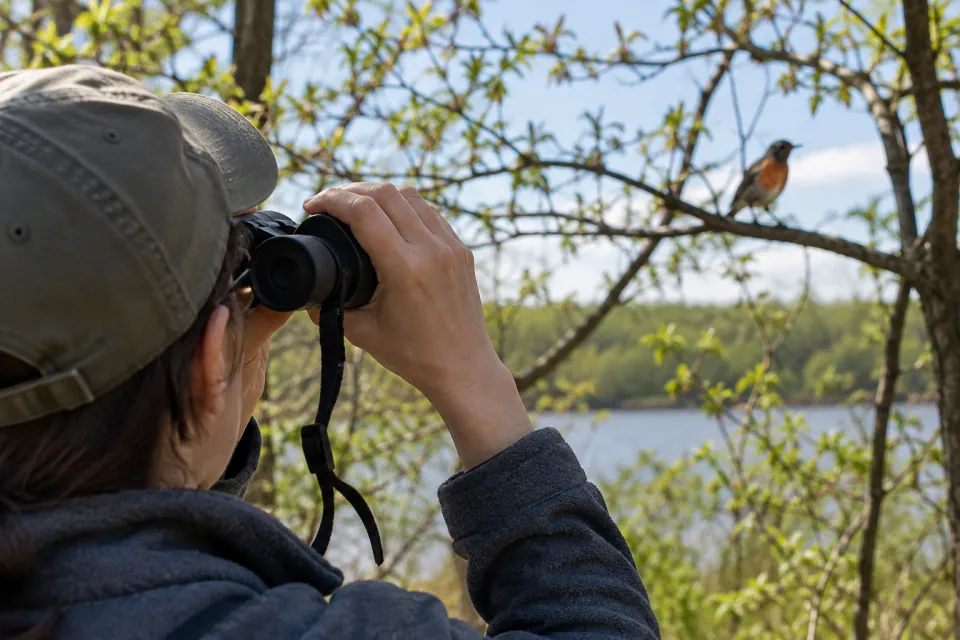
Read magnification and objective-lens size as tradeoffs in steadiness, field of view, bulk and low-light use.
Set a modest time budget and one place to pause rather than a list of target species.
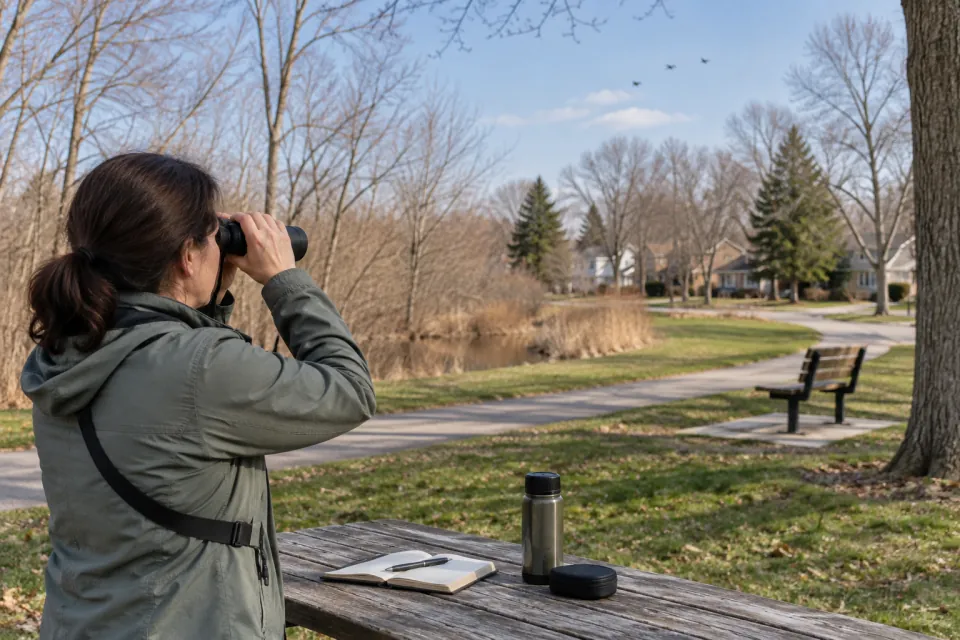
Choose a route you can comfortably leave and return from in the time available.